
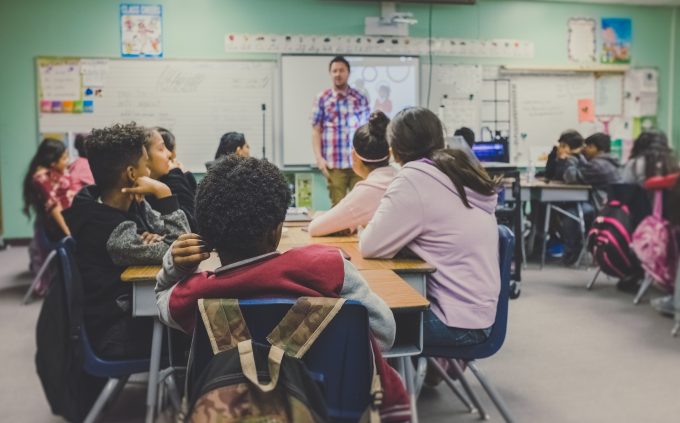
It’s not uncommon to hear negative generalizations about today’s young adults (AKA millennials). There’s a lot of blaming going around, but have we ever stopped to ask ourselves what our role might be? Or, what improvements we can make to their training? Today’s post is part two in our four-part series about equipping and fostering success in young people, with a special message to secondary school educators. If you missed our post for parents earlier in the week, you can find it here. Or, you can access the entire article at the bottom of this post.
Today’s secondary schools face enormous challenges in covering all the bases and setting students up for life success. In addition to their core education efforts, our teachers also deal with tremendous regulatory demands and increasingly fragmented families. As a former school board chair and educator, I honor their tireless investment in our younger generation.
Importantly, our secondary educators play a vital role in preparing their graduates for college, career, and life. So, it’s appropriate to consider their influence on the general state of our young adults. In doing so, I’ll approach it as an advocate for two key constituencies: the students themselves and the institutions receiving their graduates (most notably, colleges and employers).
Secondary students are not in a position to advocate for themselves, and they assume they are receiving the education and training they need for life. And, why not? Meanwhile, our colleges and employers assume their students will arrive prepared for college, career, and life. Again, why not
However, it is clear from our weak college graduation statistics and the feedback from universities and employers, that these assumptions are often erroneous. Far too many students are dropping out and/or lacking the basic skills that employers are seeking. So, while many students are book smart, signs are they’re not always life smart. This is a predictable outcome when leadership development and practical training occupy a secondary role in our schools. In too many cases, student training is neither holistic nor sustainable.
With all that in mind, I respectfully offer the following recommendations to secondary school educators who are serving our today’s students today and tomorrow’s collegians and employees:
- Develop and implement a comprehensive vision for a well-prepared graduate for life. My favorite Covey habit is “Begin with the end in mind.” Importantly, it applies just as much to organizations (like schools) as it does to people. However, in my years of speaking at schools and conferences, I have never witnessed more than 10% of the audience state that their school has defined a well-prepared graduate. Never. This is an urgent priority because it frames everything. What skills, character attributes, and knowledge do our graduates need to succeed in life? That our employers and universities desire? We must know this.
- Create the necessary pathways and programs to implement this vision for all students. his will likely involve new courses, reprioritization, and integration of concepts (e.g., leadership).
- Require leadership and life skills courses for all students. These courses, often under the purview of FCS and CTE (Family/Consumer Science and Career and Technical Education) are simply too important to be considered electives. In addition to leadership and character skill building, all students should receive practical education in post-secondary preparation, career readiness, communication and relationship building, financial management, citizenship, manners, and self awareness. We can no longer assume that our students are learning these vital skills at home. (In too many cases they are not!) This will likely involve some reprioritization of other courses to make room for these essential topics. The keywords are “holistic,” “relevant,” and “sustainable.”
- Dispense with the “college or bust” mentality. The significant first-year college dropout rate reveals the unintended consequence of an overemphasis on college as the immediate next step. For many high school students, other options such as employment, vocational schools, community college, trade schools, a gap year, and military or service are better fitting options. These are not “second rate” choices.
- Prepare all students for a professional environment. Among the biggest complaints about today’s younger workers involve their casual written and oral communications and manners. Clearly, this is an adverse consequence of today’s tech-laden world. Communication is such a success driver in life, and, it deserves to be a greater priority in our schools. Also, courses in entrepreneurship, that would expose students to all aspects of managing an organization, would be beneficial. While the latest rage is STEM (or is it STEAM…?), it’s important to recognize that most jobs, even in those types of organizations, do NOT require advanced math and technical degrees. Let’s remember that as we develop our course menus and requirements.
- Promote leadership and character, and reward students accordingly. So often, academics and athletics command the greatest award attention in our schools. Ask most employers and they’ll gladly prefer a 3.5 GPA with great character to a 3.9 with little else. How many leadership and character awards are offered in your school?
- Cease with the grade inflation. This form of coddling proves to be a short-lived source of self esteem when students face the reality of competitive environments like college and the workplace. Let’s be honest, we’re doing them no favors.
Teachers, we are so grateful for you and your tireless efforts. Keep up the good work as we all work together and learn from each other, mastering our roles as “next generation equippers.”
Next week we will address this topic with college/university educators, as well as employers. If you’re interested in gaining access to all four parts of the article, you can find it here.
About the author
 Dennis Trittin is the author of What I Wish I Knew at 18: Life Lessons for the Road Ahead and Parenting for the Launch: Raising Teens to Succeed in the Real World. Through his books, blog, and nationwide speaking engagements, Dennis prepares students for life success and equips parents and educators in their vital training role. You can find him here on Facebook.