
Furniture is expensive. You probably already know that, especially if you have recently been furniture shopping. These are just a few of the things you have to juggle when choosing the perfect piece:
- Price
- Size
- Material
- Durability
- Comfort
- Aesthetics
It is hard to find a major piece of furniture that has all of the characteristics you are after. This gets considerably more complicated when small children are a part of the equation. All of the above characteristics take on a whole new significance when the needs of little ones are considered, if you want some great options then go over to
We often forget that children have needs. Before we have children, we daydream about a house suited to our personal desires. We weren’t thinking about child safety when pricing that two-story house. And we were probably not thinking about three-year-olds when we imagined our dream furniture set. So, before you invest in furniture that will be around for the next 10+ years, here are a few criteria to consider:
Individual Pieces Vs. Sets
When it comes to the living room and bedroom, we often think in terms of sets. One of the reasons we think that is because that is how retailers have displayed and sold their products for decades. They don’t want to just sell you a loveseat. They want to sell you a loveseat, couch, side chair, and complete accessory table set.
They bundle these items in such a way that the pricing for just one is obscured. They would much rather sell you a package deal for $2,000 than a single piece for $400.
But many online retailers like Boyles Furniture photograph and display individual pieces instead of just sets. Buying individual pieces instead of sets can be easier on the budget. It allows you to get exactly the pieces that you need and it breaks the tyranny of precisely matched sets. Buying furniture on your terms rather than the retailer’s terms is a better way to buy when small children are involved.
Right-sized Furniture
No one would feel comfortable in a house built for giants. You would have to climb up onto the oversized furniture, and risk injuring yourself getting down. And while you were up there, you wouldn’t be particularly happy. That is how your small children feel about your furniture.
When designing your kid-friendly living room, don’t forget to purchase some correctly sized furniture for the little ones. This is much easier to do when you do not buy furniture sets. Few sets feature small chairs. But when everything is individually sourced, there is nothing out of place about a low chair here and a small table there.
Beyond the comfort of your child, there are other benefits to having correctly sized furniture. The little one will always have a place to sit that is all her own. You don’t have to be so uptight about the nice furniture because the children will have their own. Sure, the kids’ furniture will collect crumbs and mud stains. But child-centric furniture is often easier to clean because of removable and washable covers.
As they grow, you can just replace their furniture without replacing the whole set. Whether due to damage or growth, you will have to replace child-sized furniture more often than adult-sized furniture. Still, it keeps the rest of the furniture looking good for a lot longer. Everyone is happy.
Eliminate Accessory Tables When Possible
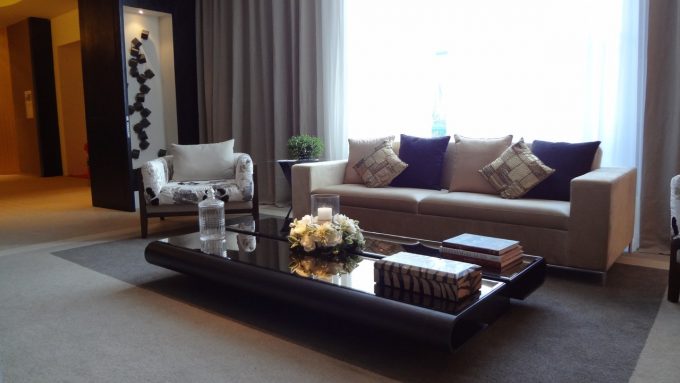
If you have to have accessory tables, avoid the ones made of glass. When small children are running around playing, they are not the most careful or observant humans in the world. Besides damaging themselves, kids will damage those tables as well. So if you have to have accessory tables, make sure they are large, highly visible, and very sturdy. You have to know they are going to try to sit on them and stand on them.
Better yet, push accessory tables to the edges of the room where they are out of the path of destruction. Put things on them so that the child does not see them as an opportunity to climb. The best advice, however, is to leave them off altogether.
The next time you go for some major furniture shopping, think of the children. Think pieces rather than sets, right-sized furniture for children, and eliminate accessory tables altogether when possible.