
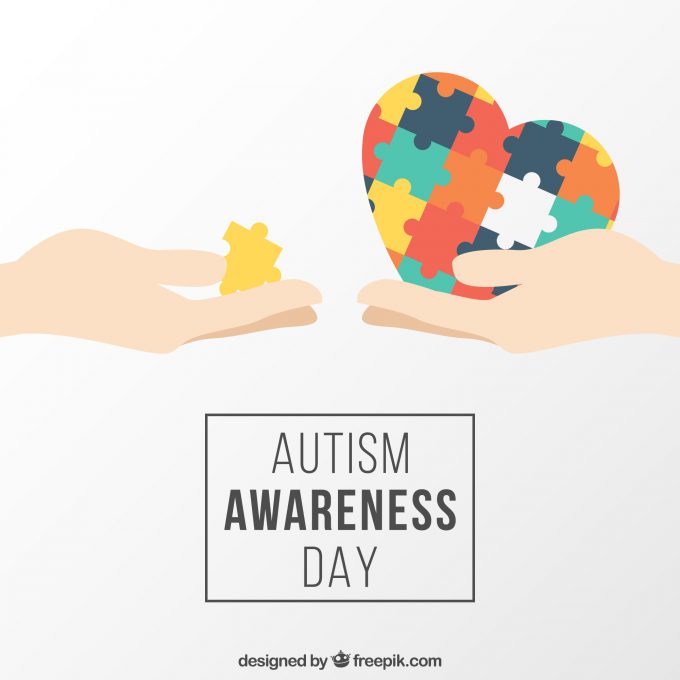
Autism Awareness month is here. World Autism Awareness Day was just celebrated on April 2nd. Autism is a developmental disorder affecting the area of the brain that affects communication and social skills. It usually appears in the first three years of life. Some parents may notice something about their child when they are 18-months-old and seek help through autism therapy by the time their child is 2-years-old. Some children may even progress normally through age 2 and then suddenly lose language and social skills they may have developed before.
Here are some signs of Autism to be aware of:
1. Development
There are different development patterns in children. Some display early signs of delay in achieving certain developmental milestones. Some will develop typically and then show signs of development slowing down with behaviors associated with autism.
2. Struggles
A child with autism might struggle in areas that may seem “easy” for other children, such as communication or social skills.
3. Hypersensitivity
Sensory input is processed differently with children who have autism. They might be hypersensitive to light, sounds, textures, tastes or smells. Children with autism might not like certain textures, such as clothes or even the tags on clothes.
4. Hyposensitivity
Some children with autism might have a low threshold of sensory input, which is the opposite of hyposensitivity. This can put them in danger sometimes. They might not have a sense of it being too cold outside and not wear a jacket, or taking a shower and not realize the water temperature is too hot.
5. Communication
They are not likely to initiate conversation or even maintain eye contact while interacting. Sometimes it can be hard for them to process or understand what you are saying to them if they are forced to make eye contact. They may seem socially distant, but they do wish to have relationships with family and friends.
6. Repetition
Children with autism like repetition, especially sticking with a schedule. A child with autism may become distress if they eat breakfast before being dressed when they normally might get dressed and then eat breakfast.
7. Focused interests
They often have a very strong interest in certain topics. It can be topics on science to their favorite characters from a TV series. They usually have extensive knowledge and may talk about the topic of interest often.
8. Interventions
Interventions usually begin early in life as possible, and usually improve in all aspects of development. Early interventions aim to improve social, communication, cognitive, motor, and behavior regulation skills within predictable routines. Teaching strategies used involve children’s interests along with behavioral principles such as giving clear and appropriate cues of desired behaviors and rewards the child’s effort.
One Response
It’s interesting to know that sensory input is the key thing to note when interacting with a person with autism. I think it would be worthwhile to help out my neighbor find an autism awareness education. Her son recently got diagnosed with autism so making sure that people in our neighborhood knows how to properly interact with her son would be ideal.