
Want a stylish bathroom upgrade that also helps benefit the environment? Style at Home reports bathroom renovations average a 75 to 100 percent return on investment upon resale.
With eco-friendly improvements, saving on energy and water means you’ll immediately start putting money back in your wallet. Consider these four eco-conscious ideas to make your bathroom, and your wallet more sustainable.
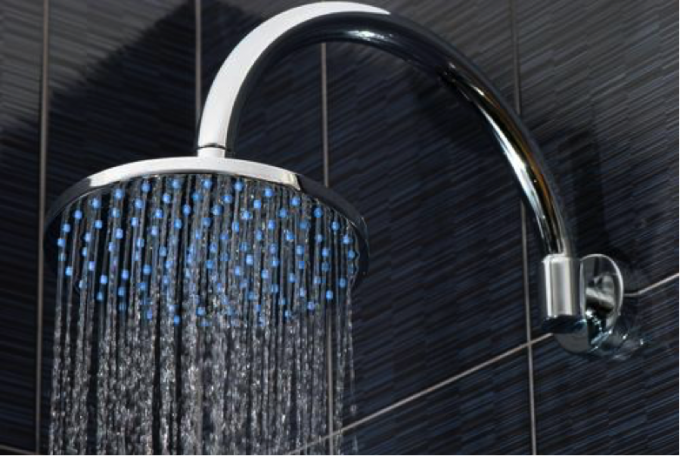
Go Low-Flow in the Shower
Installing low-flow showerheads and water faucets can cut your water consumption in half, according to the Office of Energy Efficiency & Renewable Energy. While new fixtures are required by federal regulations to limit their flow rates, showerheads and water faucets dating back to 1992 and earlier may use more than twice the amount of water as new ones. This offers homeowners an easy fix that delivers instant savings and shows off an essential update to current home purchasers.
Installing and using a steam shower can also help maximize your water output. While a low-flow showerhead produces about 2 gallons of water per minute, a steam shower uses 2 gallons of water in 20 minutes, reports Angie’s List, which showcases more potential shower and bathtub upgrades in its online guide. There’s also the added luxury that a steam shower gives to a bathroom, adding a spa-like touch.
A motion-sensor faucet allows water to flow only when you need it, so it’s not running as you soap up your hands. If you brush your teeth for the dentist-recommended 2 minutes while the faucet is running, you’re wasting water.
Save on Flushing
Toilet flushing is among the largest uses of water in a home, according to WaterSense, an EPA partnership program. Optimize water usage by installing a low-flow toilet in place of an older model, since toilets use approximately 27 percent of the water consumed in a home, according to the Duke University Center for Sustainability & Commerce.
Older toilets can use up to 7 gallons of water per flush, reports Duke, compared with newer toilets that use about 1.6 gallons or less per flush. With the current average of more than 880 gallons of water used by toilet flushing per week for a family of four, a low-flow toilet can help conserve water.
Give Your Water Heater a Facelift
Get rid of your tanked water heater, and install a tankless, portable model in your bathroom. This enables you to heat water only when necessary, helping save on energy costs required to heat the water.
Since a tankless water heater does not require a pilot light, it emits less carbon dioxide, which improves air quality. Solar-powered water heaters are another green alternative that sources energy directly from the sun. If you’re not ready to give up a water heater tank, the U.S. Department of Energy recommends heat trap installation, which can save between $15 to $30 on water heating bills.
Light Up Your Savings
While LED light bulbs are a must, motion sensor lighting in a bathroom is an even better option. Lights turn off automatically if they don’t sense motion after a certain amount of time, ensuring no energy is wasted by forgetful family members who leave the bathroom without switching off lights.
Take inventory of all your bathroom features to identify ways to make them greener while adding value to your home. A home energy consultant can give you ideas on what to prioritize. Even small upgrades can help you save.