

Food poisoning is not simply an upset stomach; it is a serious public health threat in America. In fact, the CDC estimates that about 1 in 6 Americans (about 48 million people) could suffer from foodborne illness this year. The result is approximately 128,000 hospitalizations and sadly, an estimated 3,000 deaths!
Because warm weather events often present an opportunity for bacteria to thrive and high temperatures cause bacteria to multiply more rapidly, the summer months typically see a spike in reports of foodborne illness and outbreaks.
Did you know that Many people assume that if a hamburger is brown in the middle, it is done. However, looking at the color and texture of food is not enough— you have to use a food thermometer to be sure!
According to USDA research, 1 out of every 4 hamburgers turns brown before it reaches a safe internal temperature.
Meat and poultry should be cooked to a safe temperature to destroy harmful bacteria that may be present. Color of meat and poultry is not a good indicator of safety. Use a food thermometer to make sure meats have reached a safe minimum internal temperature.
When a hamburger is cooked to 160 F, it is both safe and delicious!
(Safe Cooking Temperature Chart: http://www.foodsafety.gov/keep/charts/mintemp.html)
For more info on knowing when your meat is ready and safe check out the “Is It Done Yet?” Brochure: http://www.fsis.usda.gov/wps/wcm/connect/c825bac8-c024-4793-be76-159dfb56a88f/IsItDoneYet_Brochure.pdf?MOD=AJPERES
Today I joined in with USDA to share with our 24/7 MOMS 4 steps to safe food along with tips for healthy summer picnics and camping trips
4 Steps to Safe Food
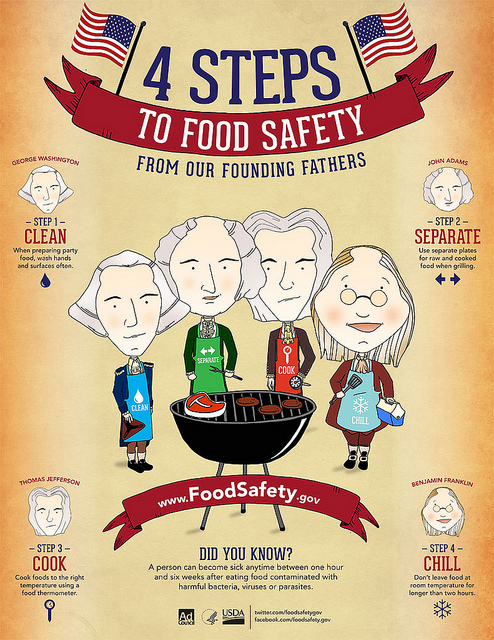
Top Tips for Healthy Summer Picnics and Camping Trips:
Bring water for cleaning if none will be available at the picnic or camping site. Pack clean, wet, disposable cloths or moist towelettes and paper towels for cleaning hands and surfaces.
Carry cold perishable food like raw hamburger patties, sausages, and chicken in an insulated cooler packed with several inches of ice, frozen gel packs, or containers of ice.
Be sure raw meat and poultry are wrapped securely to prevent their juices from cross-contaminating ready-to-eat food. If possible, store these foods near the bottom of the cooler, so that juices don’t contaminate other foods in the cooler.
If you can’t keep hot food hot during the drive to your location, plan and chill the food in the refrigerator before packing it in a cooler. Reheat the food to 165 °F as measured with a food thermometer.
A general rule of thumb for entertaining: keep hot foods hot and cold foods cold. Keep cold foods chilled to 40 degrees Fahrenheit or below and hot foods heated to 140 degrees Fahrenheit or above.
The two-hour rule is also in effect: food should not sit at room temperature for more than two hours. If bringing hot take-out food (like chicken fingers, wings etc.), eat it within 2 hours of purchase (1 hour if the temperature is above 90 °F).
Instead of using large serving bowls, serve dips and items with dairy in smaller containers. Make several in advance and keep them chilled in the refrigerator or coolers until you need them.
Offer serving spoons and small plates to reduce opportunity for guests to eat items like dip and guacamole directly from the serving container
Learn MORE:
Visit FoodSafety.gov to learn about best food safety practices, utilize “Ask Karen,” an online database with nearly 1,500 answers to specific questions related to preventing foodborne illnesses, in both English and Spanish, or to call the USDA Meat & Poultry Hotline at 1-888-MPHotline.
 Twitter Party:
USDA is hosting a 4th of July twitter party on Monday June 30th at 1pm PST Please follow hosts @MartieParty @BuzzMommy and USDAFoodSafety. They will be using using hashtag #FoodSafe4th . Come chat and learn.
Disclaimer: “This post was made possible through the support of Element Associates. All opinions are my own.”